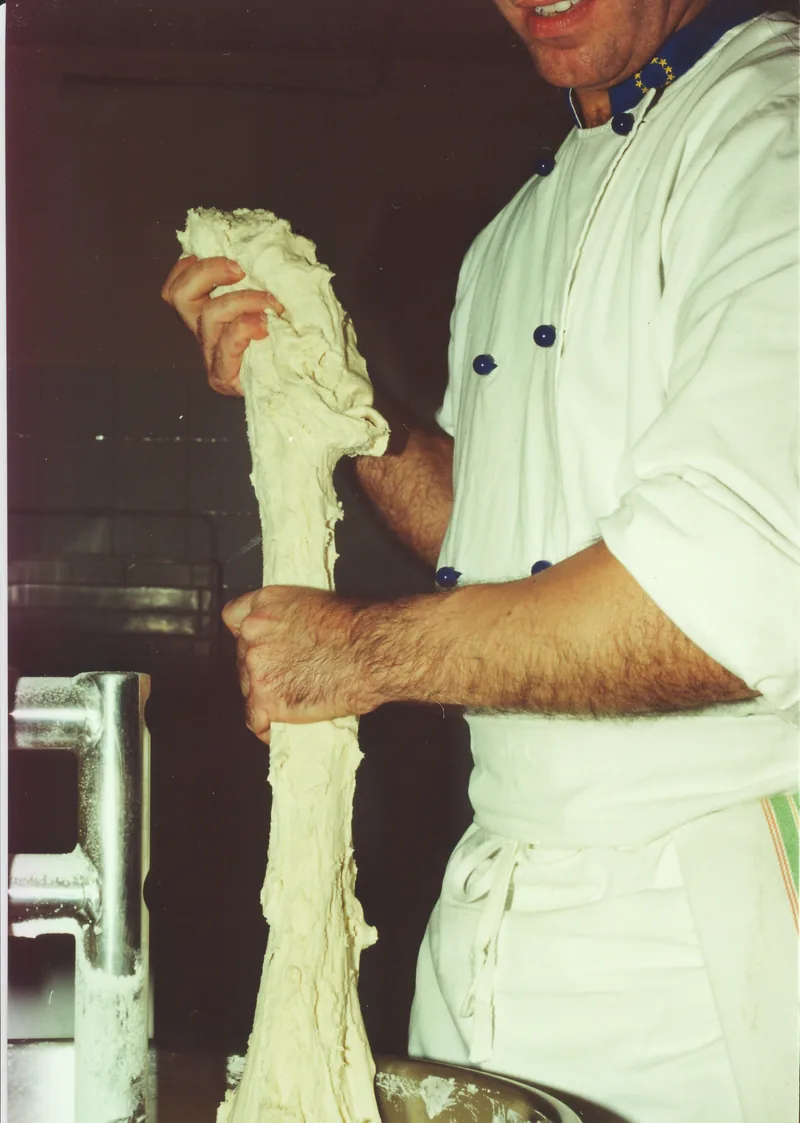
I made pizza for almost twenty years. I say it without modesty and without boasting: I know what I am talking about, because I did it every day, with my hands in the flour. And yet at a certain point I understood that what I knew was no longer enough.
I wanted a pizza that was simply good, light, digestible, the kind you finish and feel fine afterwards. With the method I used then, I could not get there. I like to put it this way because it is my way of seeing things: in our trade you often hear that there is only one right way to make pizza. I never thought so. I think everyone finds their own, and finds it when they have the courage to question what they already do well.
So I picked up the phone and called Angelo Silvestrini. He was a master at the Italian pizza makers’ school, in Caorle. I asked him technical questions, then the calls became long ones, and at some point we realised we were friends. More than twenty-five years have passed and we still are.
Angelo did not give me a recipe, and I am grateful for it. He pushed me to look at every element of the pizza one by one: the flour, the water, the salt, the yeast, the temperature, the time. Time, in my view, was what I was missing. From there I changed method decisively and moved to indirect dough: part of the flour works first, on its own, and prepares the rest. Fermentation gets longer, the dough has time to mature, and the result is a lighter, more digestible base. For me it was the most important discovery of my whole life as a pizza maker.
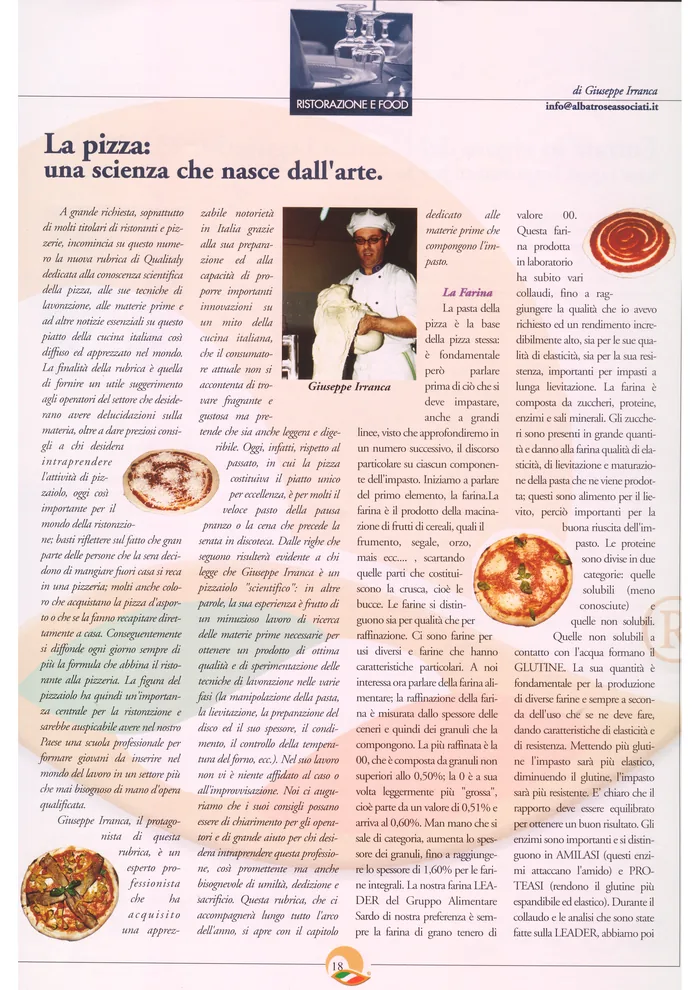
At the time I also dreamed of a pizza makers’ school here in Alghero. It seemed strange to me that a trade so important to the restaurant world had no place where it could be taught properly. When I began writing for Qualitaly, the magazine, introducing the column, remarked that it would be desirable to have in our country a professional school to train young people for the world of work. It was my thought too, and reading it in print, on a magazine page, made me feel less alone.
The school never came to be. What I learned I did not lose, and I still use it, even outside the kitchen.
One thing I have always thought: a pizza cannot be judged at a glance. A tall crust or a nice photo says little about what is inside, about how many days and how many phone calls stand behind a dough that rests. The same goes for many other things.
Giuseppe Irranca