People choosing an energy supplier almost always look at the price, and that is natural. It is the first thing you see, it is written in a number, you compare it in a minute. I have worked in the energy market since 2004 and I believe it is also the thing that lasts the least. A contract is lived through for years, and what really weighs, for better or worse, is what remains after signing.
Sooner or later something always happens. An invoice that does not add up, a takeover to be done quickly, a file stuck somewhere, a change of power that was needed yesterday. At that moment the number written on the offer stops mattering, and what matters is who answers the phone, how soon, and whether they can explain what is going on. A low price with an absent service costs you later, in lost hours, in frayed nerves, in decisions taken badly because nobody listened. Real savings, in my view, are built over time and are made mostly of things that do not happen.
Then there is a part many skip: understanding how much you consume, and why. It sounds trivial and it is the part most often missing. Many companies know what they pay, few know when, where and for what reason they consume what they consume. First you measure, then you decide, and only after that does it make sense to choose who to buy from. Doing the opposite is like choosing the shoe before knowing the size of your foot. That is why I think the right supplier is not the cheapest in absolute terms, but the one that suits how your company works and that you can trust when you need it.
From here follows another idea, which for me is worth more than many declarations: the cleanest kilowatt hour is the one you do not consume. It does not have to be produced, transported, paid for. Renewable sources are important and I say so without reservation, but an avoided consumption has the advantage of asking nothing from anyone. Working with companies I often see that savings and respect for the environment coincide: less waste means less cost and less impact, and there is no need to choose between the two.
That is why I am wary of anyone who paints an offer green and stops there, just as of anyone who looks only at the price. It is always appearance, and appearance is convenient: it has a nice colour, takes little effort and is understood at a glance. I prefer a longer and less brilliant conversation, in which you look at the data, discover the waste and decide with the numbers in front of you.
I live on an island where the landscape is part of everyone’s life. It seems to me that here every discussion about energy soon becomes a discussion about the land, and I find that right. It is not for me to say what is best for a place that belongs to those who live in it. I can only say that whoever consumes consciously leaves more room for choices, and that the best choices are made when nobody is in a hurry.
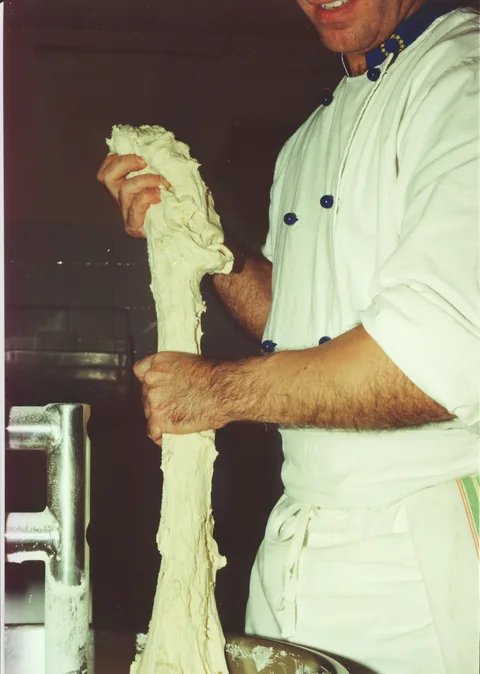
I have always followed my clients with attention and with a care some might call maniacal, and I never considered that a flaw. Answering, calling back, checking a detail one more time, being there even when it is not your turn. I learned to work this way first in front of the oven and then in energy: if something has to be done, it is done all the way, and nobody cares how hard it was.
Behind every contract there is a person, with a company to keep standing, a family, an evening when they would like to go home without worries. I still believe in strong relationships between people, before those between entrepreneurs. When you remember that, the work changes: it stops being a file to close and becomes a relationship to keep. I feel I am among those who still believe in it, and it seems to me there are fewer of us than there used to be.
I often say, even to myself, that business is a consequence and not a goal. If you work well for people, the rest arrives when it must, and not necessarily at once. It is a way of doing business that takes patience, and that you understand only with the years.
Giuseppe Irranca